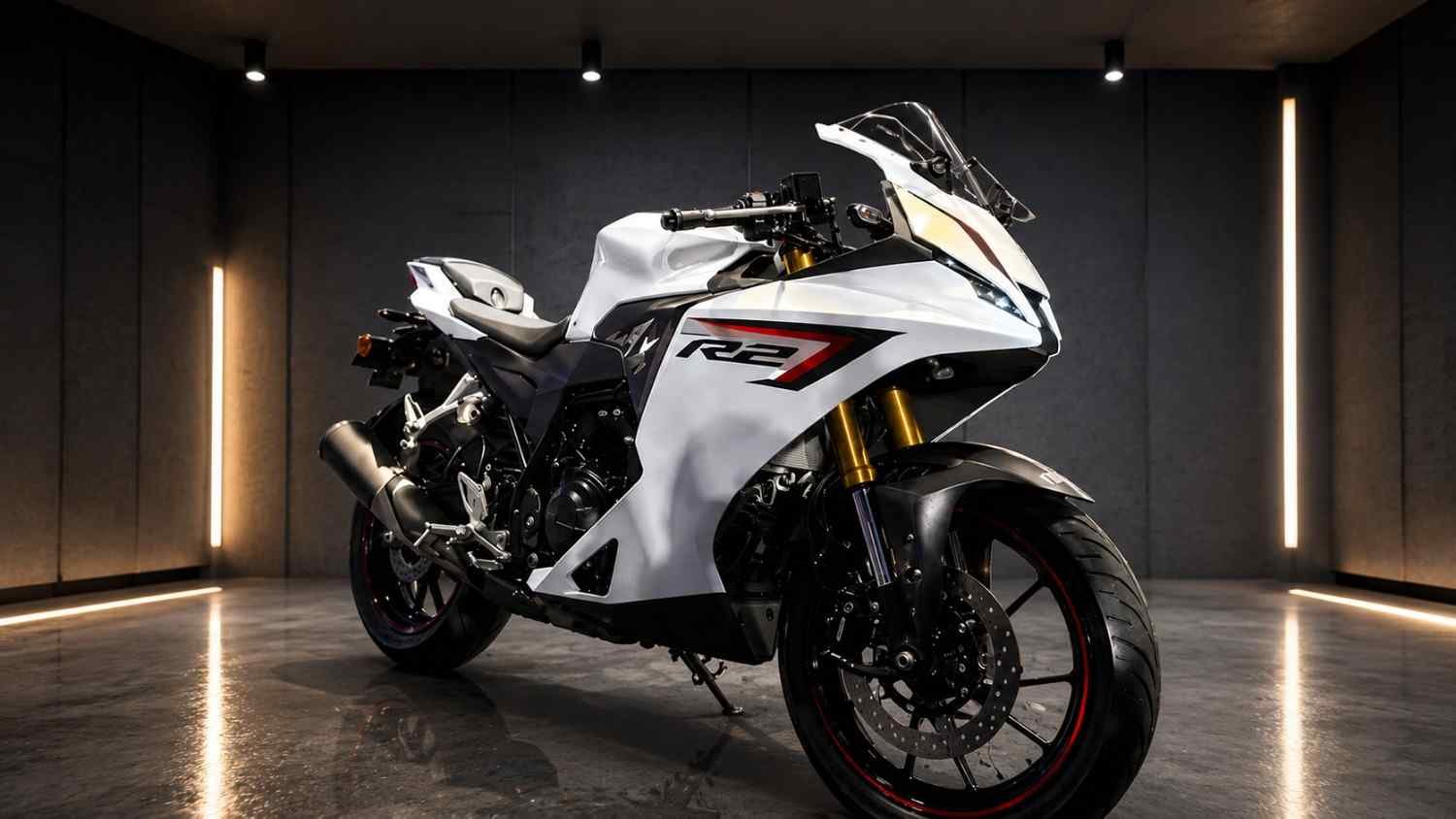
If you have been following the entry-level sportbike market, you already know how dominant the Yamaha R15 V4 has been. It looks fantastic, offers solid track-focused geometry, and gives young riders a taste of Yamaha’s R-series DNA. However, for a lot of everyday riders, the R15 V4 comes with a few undeniable trade-offs mostly around comfort, urban usability, and low-end power. Enter the Yamaha R2. Designed to sit right in that sweet spot between accessible displacement and real-world performance, the R2 addresses almost every single pain point riders have complained about with the R15 series for years. Let’s find out in detail which Yamaha R2 is better.
Practical Engine Performance and More Usable Torque
The R15 V4 features Yamaha’s famous 155cc VVA engine. While VVA (Variable Valve Actuation) works wonders high up in the rev range, the bike lacks low-end grunt. In stop-and-go city traffic, you constantly have to work the gear lever and keep the revs high to stay in the powerband.
The Yamaha R2 steps up the displacement game. With a larger engine capacity (around the 200cc mark), it delivers significantly better low-end and mid-range torque.
- City Commuting: You don’t need to constantly downshift just to execute a quick overtake.
- Highway Cruising: The R2 holds higher speeds at lower RPMs, meaning the engine feels relaxed rather than strained on long stretches.
- Fewer Gear Shifts: Traffic rides become far less exhausting because the engine offers immediate roll-on power.
While the R15 V4 thrives only when pushed hard on an open track, the R2 gives you power precisely where you use it most: on real, everyday roads.
A Far More Comfortable Riding Ergonomics
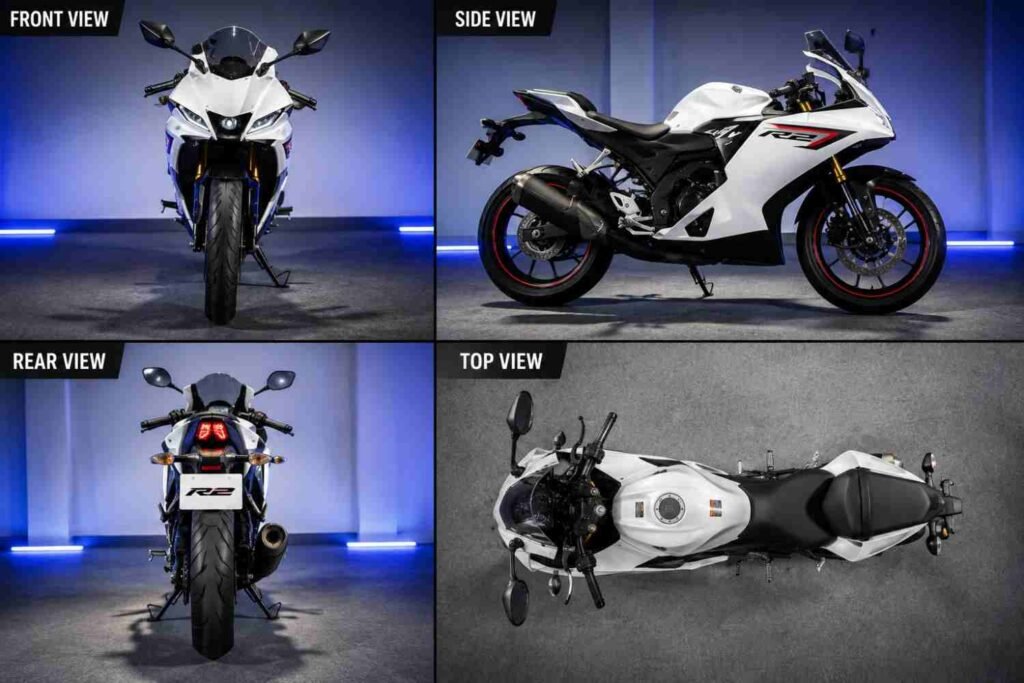
There is no sugarcoating it the Yamaha R15 V4 has an aggressive, track-focused riding position. The low clip-on handlebars and high rear-set footpegs put significant pressure on your wrists, shoulders, and lower back. If your daily commute involves more than 30 minutes of bumper-to-bumper traffic, the R15 can get uncomfortable fast.
The Yamaha R2 rethinks this balance completely. It keeps the sharp, aggressive supersport look from the outside, but underneath, the riding ergonomics are much more forgiving.
- Slightly Raised Clip-Ons: The handlebars sit higher relative to the seat, taking the weight off your wrists.
- Slightly Neutral Footpegs: Your legs aren’t cramped up as tightly, making long trips much easier on your knees.
- Pillion Comfort: The rear seat on the R2 offers better padding and a slightly wider base compared to the elevated, thin perch on the R15 V4.
You get all the head-turning style of an R-series bike without needing a trip to the chiropractor after a week of commuting.
Better Highway Stability and Wind Protection
Because the R15 V4 is lightweight and tuned for flickability on tight tracks, it can feel a bit flighty on wide-open highways, especially when dealing with heavy crosswinds or high-speed overtakes around large trucks.
The Yamaha R2 sports a wider frame, a slightly longer wheelbase, and beefier tires. This added substance pays off massively once you cross 80 km/h.
- High-Speed Confidence: The extra footprint keeps the bike glued to the tarmac, giving you rock-solid straight-line stability.
- Aerodynamic Windshield: The R2 features a slightly broader front fairing and windscreen design, deflecting wind away from your chest more effectively than the compact front end of the R15.
- Vibration Management: Higher displacement allows you to cruise at 100–110 km/h without the engine revving near its redline, keeping handlebar vibrations to a minimum over long distances.
If your weekend plans involve intercity highway trips or long touring rides, the R2 is simply built to handle those miles better.
Upgraded Hardware and Braking Power
More power and weight demand better componentry to keep everything under control, and Yamaha didn’t cut corners on the R2. While the R15 V4 is well-equipped with USD forks and Dual-Channel ABS, the R2 takes component quality a notch higher.
- Enhanced Braking Setup: The R2 comes equipped with larger front brake discs and upgraded calipers, giving you stronger initial bite and better brake feel under hard deceleration.
- Re-tuned Suspension: The front upside-down (USD) forks and rear monoshock on the R2 are valved specifically to absorb rough road patches better than the stiffly sprung R15 V4, which tends to bounce you around on uneven pavement.
- Wider Rubber: Wider front and rear tires not only enhance the bike’s big-bike stance but also offer a larger contact patch for improved grip during aggressive cornering or emergency braking.
Premium Big-Bike Styling and Road Presence
- Let’s be honest: looks matter a lot when buying a fully-faired motorcycle. The R15 V4 is a great-looking machine, but because there are so many of them on the road, it has lost a bit of its exclusivity. Furthermore, its slim profile means it can sometimes look a bit small from certain angles.
- The Yamaha R2 takes heavy design cues from its bigger siblings, the R3 and R7. It features a broader front apron, sharper LED projector headlights, and wider side fairings that give it a true “big-bike” muscular look.
- When parked next to an R15 V4, the R2 looks noticeably more substantial, aggressive, and premium. You get the visual presence of a 300cc–400cc motorcycle at a fraction of the running cost.
Quick Comparison R2 vs R15 V4
| Feature | Yamaha R15 V4 | Yamaha R2 |
| Riding Position | Highly Aggressive (Track-Focused) | Sport-Tourer (Balanced & Comfortable) |
| Power Delivery | Top-Heavy (Requires High RPMs) | Strong Low & Mid-Range Torque |
| Highway Cruise | Strained at 100+ km/h | Effortless at 100+ km/h |
| City Riding | Frequent Gear Changes | Easy Roll-on Acceleration |
| Road Presence | Compact & Slim | Muscular & Broad |
Final Verdict Which One Should You Buy?
- The Yamaha R15 V4 remains an amazing machine for track enthusiasts, college students who want a sharp-looking bike for short distance commutes, or anyone focused strictly on learning track riding techniques.
- However, if you want a motorcycle that you can ride to work every day without aching wrists, take out on long highway road trips on weekends, and still enjoy in the twisties, the Yamaha R2 is objectively the better all-rounder. It keeps the excitement of the R-series brand alive while fixing the real-world usability issues of the R15.
FAQ:
1. Is the Yamaha R2 good for daily city commuting?
Yes. Its upright ergonomics and stronger low-end torque make it much easier to ride in traffic than the aggressive R15 V4.
2. Which bike is better for long highway rides?
The Yamaha R2. Its larger engine cruises comfortably at high speeds without engine strain, and its wider frame offers better stability.
3. Does the R15 V4 have better track performance?
Yes. The R15 V4’s sharp, committed riding posture and high-revving VVA engine give it a slight edge on dedicated racetracks.
4. Is the Yamaha R2 comfortable for a pillion?
Yes. The R2 features a wider, better-padded rear seat compared to the high and narrow pillion seat on the R15 V4.
5. Which bike gives better fuel mileage?
The R15 V4 offers slightly higher mileage due to its smaller 155cc engine, though the R2 remains quite fuel-efficient for its power class.
Also Read:
- Bajaj’s New Adventure Bike Is Coming Soon: Expected Price, Engine and Power Revealed
- Tata Motors Hikes Car Prices Again After Maruti and Hyundai: Check New Prices and Effective Date
- Honda Activa 110 Standard, DLX or Smart? Here’s the Best Variant for Your Money
- TVS has taken a giant leap! It has overtaken Honda to become the country’s largest scooter company.
- Bajaj Pulsar 150 and Pulsar 125 Get a Big Update for the 25th Anniversary
- New KTM 390 Adventure Unveiled With Fresh Graphics Price, Specs and Features

Hello, I’m Pawan Chimurkar, an automotive writer and contributor at GrandValueWith.com. I have over six years of experience in article writing, covering cars, motorcycles, scooters, electric vehicles, and the latest developments in the automotive industry.
I focus on explaining automotive information in simple, clear, and easy-to-understand language. My aim is to help readers understand vehicle prices, specifications, features, launches, and other important details so they can make informed decisions.